
Tulare County City Directory Shelf
Tulare County does not have one verified, continuous countywide directory run. The historical trail is organized around individual communities, telephone exchanges, reverse volumes, and related local collections. Dinuba, Exeter, Farmersville, Lindsay, Porterville, Tulare, Visalia, and Woodlake each sit within a different municipal setting, while county offices serve unincorporated communities. The table separates verified collections from the local city-directory shelf list that still needs staff confirmation.
| Collection | Years | Where Held | Access |
|---|---|---|---|
| Local city, telephone, and reverse directories | Exact years and publishers are not published online | Annie R. Mitchell History Room, Visalia Branch | Ask staff by city, title, and year; visit or submit a research request |
| Great Registers | 1869, 1872, 1879-80, 1882, 1884, 1886, 1888, 1890, 1892, 1894, 1896 | California State Library films and FamilySearch catalog | Catalog access; some images may require an account or affiliate library |
| Visalia Public Cemetery records | 1875-1990 | Cemetery district and FamilySearch collection | Name search; full record access can vary by image availability |
| Federal population census | 1850-1950 | National Archives, partners, and library databases | Released after the federal 72-year rule |
| California State Census | 1852 | State Archives and FamilySearch | Historical household source |
| Sanborn fire-insurance maps | By place and edition | Library of Congress and library databases | Search a place and edition to compare old structures and streets |
The official online shelf list is a research gap. No exact Tulare County publisher key or local year run is asserted here, and no Polk series is assumed without a volume in hand. A precise request to the Annie R. Mitchell History Room can identify whether a desired city, street, or year is represented, whether the item is bound or on microfilm, and which nearby collection can fill a missing year.
Tulare County Directory at Annie Mitchell
The Annie R. Mitchell History Room at the Visalia Branch, 200 W. Oak Ave., Visalia, is the best local starting point for directory research. It is open Tuesday-Friday from 1-5 p.m. and can be reached at 559-713-2727. Researchers may email or use the web research-request form. Staff asks for a precise name, date range, place, and question. A request can take days to weeks because research is performed as staffing permits.
The room connects directory work to historical microfilm, school yearbooks, newspaper access, and a Memory Lab. That mix matters when a directory entry ends without an explanation. A newspaper may show a move or obituary, a yearbook may fix a classmate's name and face, and microfilm may preserve a title or year absent from the web catalog. County museum and historical-society collections can add photographs, family papers, and organization material, but appointment and research policies should be confirmed directly.
The Annie R. Mitchell History Room collection page is the source for the room's hours, contact route, and local-history research links.
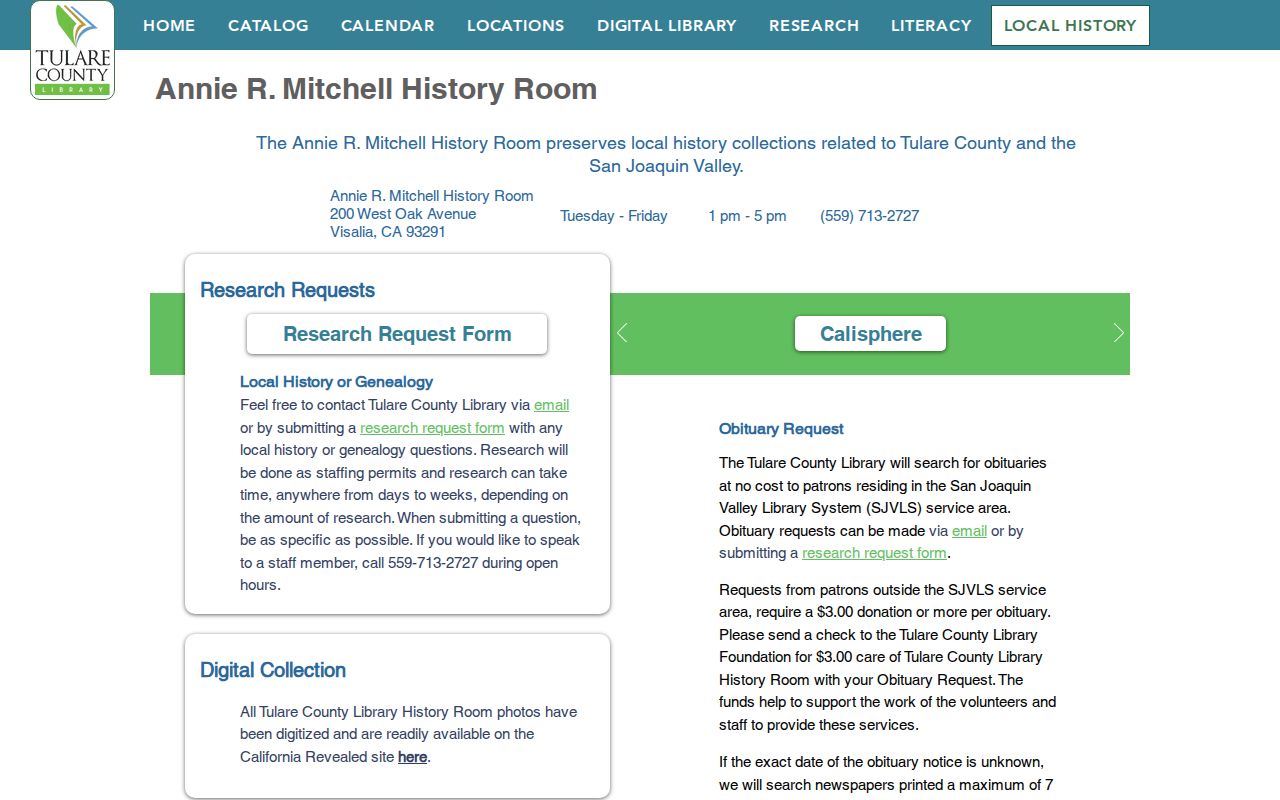
The library view points researchers toward shelf-based sources rather than promising a complete digitized directory run. Ask for the exact volume before relying on a title, publisher, or year.
Reading Tulare County City Directory Entries
A typical twentieth-century city directory places a surname and given name in an alphabetical section, then may add a spouse in parentheses, an occupation, a street address, and a mark for an owner or listed occupant. A separate street guide reverses the order. These are general conventions, not a verified Tulare County publisher key. The abbreviation page in the exact volume controls, especially when a mark could mean a residence, a boarding place, a widowhood notation, or a business connection.
| Name | Surname and given name, with variant spelling recorded as printed |
|---|---|
| Spouse or household note | A spouse may appear in parentheses or in a linked entry |
| Occupation | A brief occupation label, when the volume collected one |
| Address | House number and street, sometimes with a residence abbreviation |
| Owner or occupant mark | A symbol or letter that must be decoded from that volume's key |
| Widow notation | A short family-history clue such as a widowhood note, if printed |
Read the entry as a dated listing, not a complete household census. The canvass may omit children, lodgers, seasonal residents, people who declined listing, or anyone missed by the publisher. Compare the name entry with the street-order pages and then with a record held by a public custodian.
- Criss-cross directory
- A reverse section arranged by street and house number so a researcher can move from an address to a listed occupant.
- Householder index
- An alphabetical name section that may group a household head, spouse, or related entry under the principal surname.
- Abbreviation key
- The volume's own legend for occupation, residence, relationship, or owner and occupant marks. Photograph or transcribe it before reading symbols.
Tulare County Criss-Cross Directory by Street
Street-order searching changes the question from “Who was listed by name?” to “Which name was attached to this address in that edition?” Start with the street spelling and house number as printed. Check the street section, note the listed name or telephone detail, then return to the alphabetical entry for occupation, spouse, and cross-references. A reverse directory can reveal the neighborhood context that an alphabetical page hides.
- Confirm the city and edition before reading the street line.
- Copy the house number, street spelling, listed name, and any symbol exactly.
- Check the alphabetical section for the same name and related address.
- Compare the result with a census, newspaper, cemetery, or recorded property clue.
Historical street guides do not establish a current occupant. For current address-keyed work, the Streets page handles parcel, deed, GIS, permit, and jurisdiction questions. The city-directory method remains valuable for a chosen year and for tracing a named household across editions.
Tulare County Historical Records Between Directories
Selected Tulare County Great Registers survive at useful intervals between federal census snapshots. The verified years are 1869, 1872, 1879-80, 1882, 1884, 1886, 1888, 1890, 1892, 1894, and 1896. The catalog describes an alphabetical arrangement by the first letter of surname. Depending on the year, an entry can include a name, age, nativity, occupation, residence or precinct, and naturalization details.
These registers are historical voter and resident evidence, not a current voter list. The FamilySearch catalog for Tulare County Great Registers is the place to check the filmed series and access conditions. A register name can anchor a directory search to a time and precinct, while a later newspaper, deed, or cemetery entry can test whether the same person continued in the area.
Tulare County Cemetery Records Add Detail
The Visalia Public Cemetery collection covers 1875-1990 and contains 55,596 searchable records. Its search form accepts First Names, Last Names, Birth Place, Birth Year, and a More Options control. That is a useful companion when a directory name disappears, because the cemetery index can distinguish people who share a surname and can point to a grave or mortuary record.
The index card can show the deceased name, death date, grave location, and record page. A fuller interment entry may add sex, age, race, birth and death places and dates, attending mortuary, burial number, grave, and burial form such as vault or ashes. The Visalia Public Cemetery collection is an identity clue and an endpoint for a household trail, but burial proves interment, not a person's whole residence history.
- Use the printed name and variant spellings.
- Compare birth and death details with a directory age or obituary.
- Record grave and mortuary fields for follow-up research.
- Treat a cemetery match as evidence to corroborate, not a complete biography.
Tulare County Directories, Yearbooks, Newspapers
Yearbooks and newspapers often supply the missing link between a directory address and a family story. The History Room's yearbooks can resolve a classmate's given name, school year, activity, or photograph. Newspaper microfilm can carry obituaries, weddings, legal notices, moves, organization news, and brief announcements that explain why a name appeared in one volume and not the next.
Search a surname with a place and a year, then preserve the page title and date. A newspaper item is secondary evidence until it is matched to an official filing, cemetery card, directory entry, or family paper. College of the Sequoias library and archives, school alumni material, church records, fraternal collections, veterans posts, and local ethnic organizations can add historical context. Modern membership rosters are private unless deliberately published.
Memory Lab access can help preserve a scan or photograph of a lawful research find. Keep the volume title, page number, edition, and source location with the image so another researcher can repeat the search.
Family History in Tulare County City Directories
Trace a household one edition at a time. Begin with the strongest known name and year, then let address continuity, related names, and independent records carry the search across the gaps. A directory entry can show where a person was listed, while a census or deed answers a different question.
- Copy the first known name entry verbatim, including spouse, occupation, address, and symbols.
- Check the street section for the same address and nearby listed names.
- Move backward and forward one volume at a time, noting every address change and spelling variant.
- Pair directory entries with the federal census for 1950 or earlier and use enumeration-district maps when streets are known.
- Close a gap with a deed, newspaper, probate file, Great Register, yearbook, or cemetery record.
A disappearance is not proof that a person left the county. It may reflect a move, death, an omitted canvass, a street renumbering, an annexation, or a volume that used a different title. When a historical name needs a modern identity check, the Resident Lookup page can keep the current-record question separate from the shelf research.
Tulare County Directories and the 1890 Gap
Most 1890 federal population schedules were destroyed nationally. That gap is especially important when a Tulare County family appears in an 1880 census and a 1900 census but not in a surviving federal page between them. Great Registers, city directories, newspapers, deeds, cemetery records, and the California State Census of 1852 provide different kinds of evidence that can bridge the missing snapshot.
The National Archives census research page explains the federal access framework and the 72-year release rule. Federal census records publicly available through 1950 can support a household comparison, but changing enumeration districts and county boundaries require attention to the jurisdiction in force when the record was created.
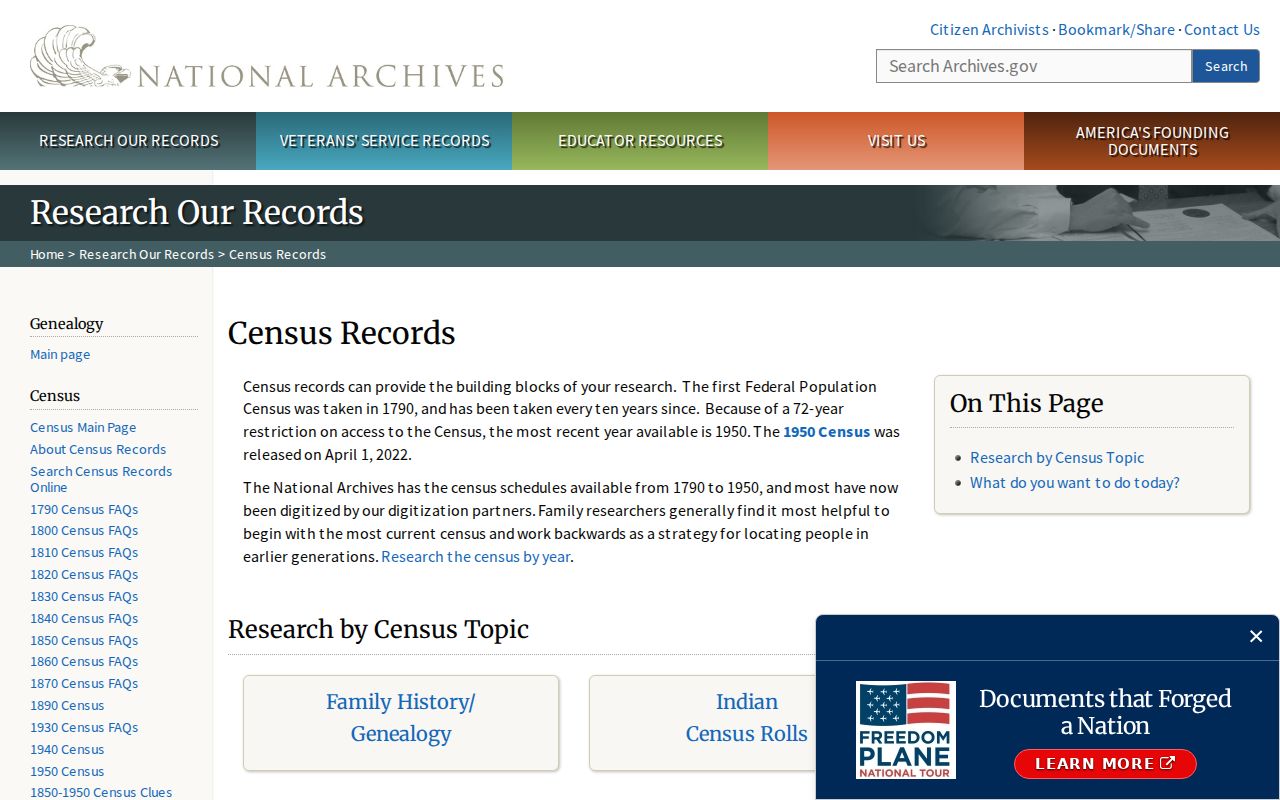
The census view is a useful reminder that a directory is one dated layer among several. Match names, ages, places, and addresses without forcing every difference into one household.
Tulare County City Directory Timeline
A short timeline keeps the collections in their proper order. It also shows why no single city directory can stand in for every decade or every community.
| Period | Record milestone |
|---|---|
| 1852 | Tulare County was created, and the California State Census supplies an early household snapshot. |
| 1869-1896 | Selected Great Register editions provide named historical voter and residence evidence. |
| 1875-1990 | Visalia Public Cemetery records preserve burial and mortuary detail across a long local series. |
| 1880-1900 | The destroyed 1890 federal population schedules make directories and registers important bridge sources. |
| 1850-1950 | Federal census releases provide household checkpoints under the 72-year rule. |
| Modern access | Assessment and GIS summaries are online, while local directory shelves, microfilm, and yearbooks remain partly physical. |
Publication dates for local city, telephone, and reverse directories are not asserted beyond what the History Room can verify. Ask for a title-level inventory, then note whether the item is an original, a film copy, a scan, or a reference to another repository.
A Modern Clue Beside the Directory Shelf
Historical research sometimes needs a present-day lead, but a current clue should not be mistaken for a city directory entry. California's free unclaimed-property search accepts a required Last or Business Name or Property ID, with optional First Name, City, and ZIP fields. Exact name matches appear first, followed by similar names. A result may reflect an old reported address or property relationship rather than a current Tulare County residence.
The California unclaimed-property search is useful only as a narrow follow-up after a name and date are anchored in historical records.
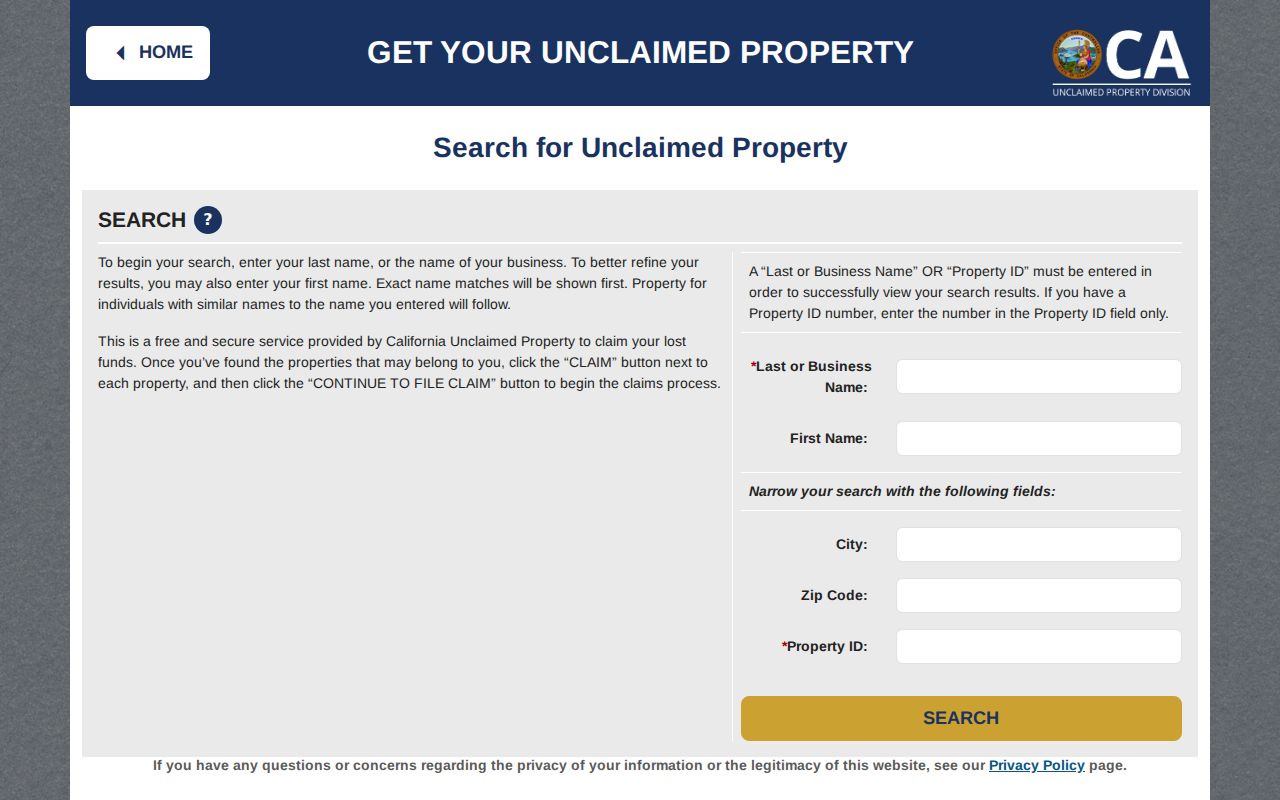
The search screen illustrates a modern name-and-place filter that can complement, but never replace, a dated directory, cemetery record, or original archival source.